
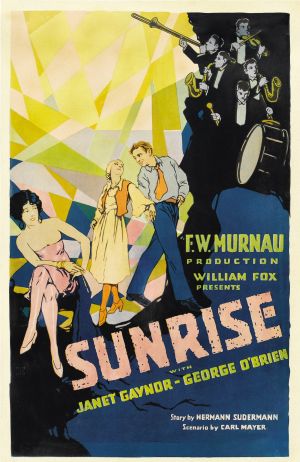
 “Don’t be afraid of me!”
 The narrative itself progresses with a swift pace as a film could, and does, today. The techniques, innovative for their time, are used to great effect to ensure that the momentum of the story is not lost. In the initial set-up, we are shown in flashback the ‘happier times’ which the married couple had. This subtle plot-point informs you of the romance and tragic outcome of their marriage. You sympathise with the man as he has fallen out of love with his wife – but you can see that his wife has not lost hope in him. The characters are fully fleshed out – their challenges, difficulties and hopes are realised forcing you to truly root for them when they witness a Wedding and emotionally ‘remarry’ to begin a new life together.
 |
| Girl Interrupted at Her Music by Vermeer |
The Influenced and the Influencer
Indeed, expressive lighting also relates the film to the German Expressionists that Murnau was affiliated with. His move to Hollywood in 1926 followed an extremely successful period whereby he directed Nosferatu and Faust. The use of lighting to gain a sense of expression directly feeds back to this time period in addition to a clear correlation between the role of the ‘City Girl’ and ‘Nosferatu’ as both characters lurk in the shadows and command our attention with outstretched arms and black-costume.
Following Sunrise, I am sure that the middle-act of the couple re-establishing their love influenced Leo McCarey’s Make Way For Tomorrow, a film which portrays an old-age couple reigniting their romance by walking around New York; visiting bars and venues which they recalled when they were on their honeymoon. Both couples reflect on their lives together and are aware of the lack of time they had given each other. In Sunrise, the couple are younger and we see the birth of a child stalling their romance. Whilst in Make Way For Tomorrow, it is the long-period of raising their children that has stopped them from committing to a holiday sooner. Though Make Way for Tomorrow was made a full-decade later, I am sure the success critically in Hollywood for Sunrise surely reached McCarey.
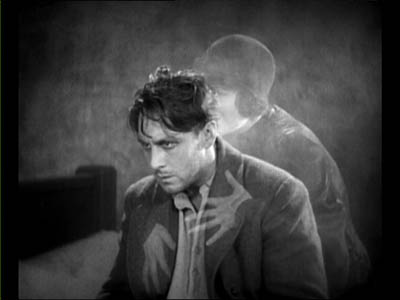 The Timelessness
 Unfortunately Sunrise was a box-office failure on its release, but it garnered many awards – including one of the very-first Oscars. In 1927, the Academy Awards had two awards that eventually became the prestigious ‘Best Picture’. Originally, the two categories were for ‘Production’ and ‘Unique and Artistic Production’. Sunrise won the latter (Oscar-Movie buffs will note that Wings won ‘Production’). Mark Cousins, in The Story of Film commends the “poetic force” of Sunrise and truly, this is what has held the film in such high regard. Cousins notes how “Master, Vidor and Rey, already considered… the contrasting values of country and the city” but, even in 2012, it had not captured this with such beauty and clarity – invoking the gentleness of Vermeer and the bold elements of German Expressionism.
 simoncolumb.com
Great review. I sometimes forget how good this film is – they certainly don't make them like this anymore.
Thanks man! I think THE ARTIST kinda goes against not making it 'like this' anymore. Joking – a great film.
Bah! The only similarity The Artist has with Sunrise is they are both silent films.
Silent filmmaking is the only comparison – that was all i meant.